Why Pre-Construction Planning Determines Project Success

When homeowners think about a remodeling or construction project, they often imagine the exciting parts: choosing finishes, seeing walls come down, watching new spaces take shape, and ultimately enjoying the completed result. While the construction phase receives most of the attention, experienced contractors know that the foundation of every successful project is built long before construction begins.
Pre-construction planning is one of the most important phases of any residential construction project. It is the stage where goals are defined, budgets are established, designs are refined, potential challenges are identified, and expectations are aligned. The time invested in planning often determines whether a project runs smoothly or becomes plagued by delays, budget overruns, confusion, and frustration.
Simply put, successful construction projects rarely happen by accident. They are the result of thorough preparation and careful planning.
What Is Pre-Construction Planning?
Pre-construction planning refers to all the work that takes place before physical construction begins.
This phase may include:
Initial consultations
Project scope development
Budget discussions
Design work
Material selection
Permit preparation
Site evaluations
Engineering reviews
Scheduling
Risk assessment
The goal is to create a clear roadmap that guides the project from start to finish.
Rather than rushing into construction, pre-construction planning allows homeowners and contractors to make informed decisions before work begins.
Establishing Clear Project Goals
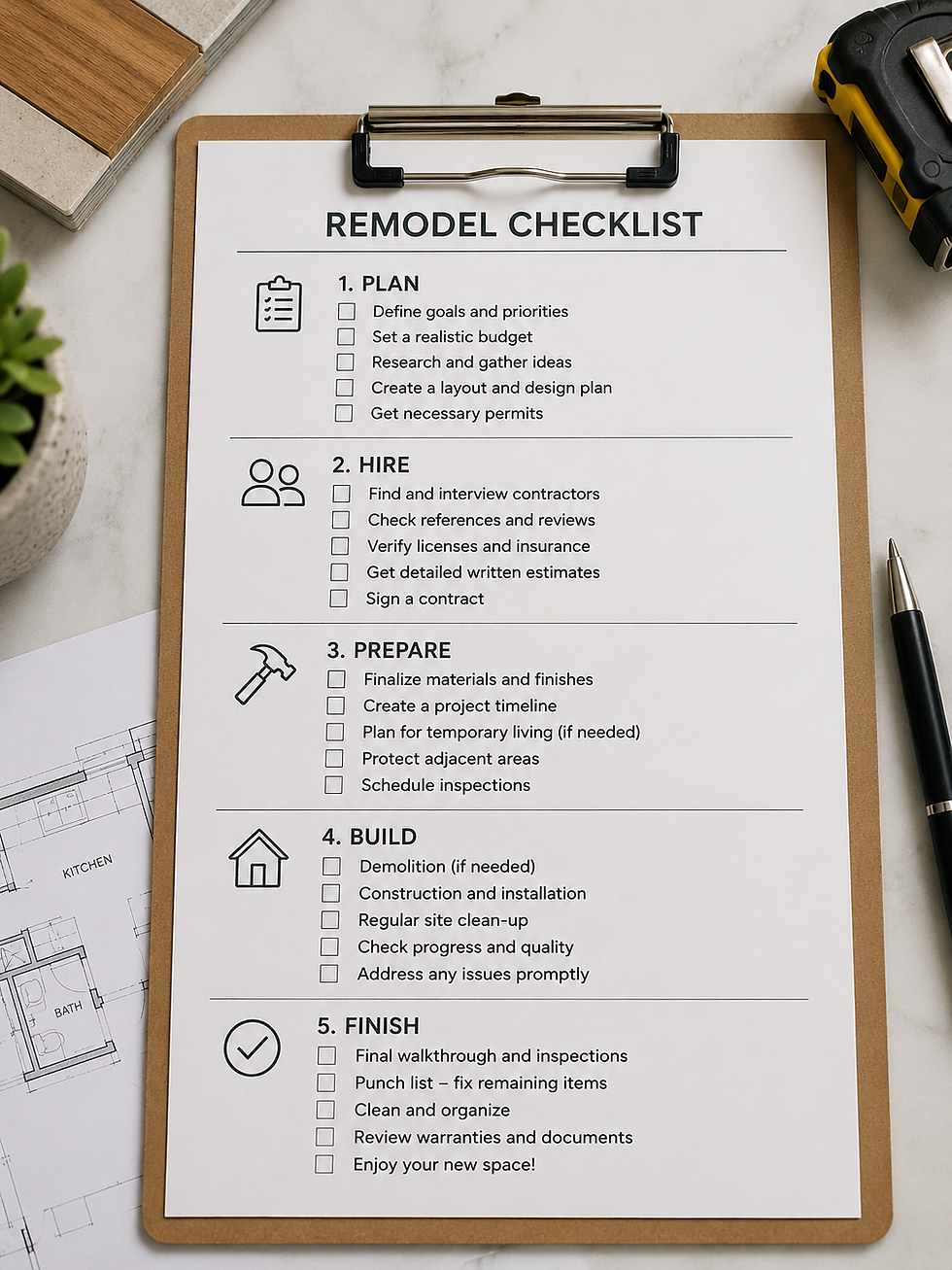
One of the first steps in pre-construction planning is defining the project's objectives.
Many homeowners know they want a new kitchen, bathroom, addition, or finished basement, but they may not have fully considered what success looks like for the project.
Questions often include:
What problems are we trying to solve?
How do we want the space to function?
What features are most important?
What are our long-term goals?
How will our needs change in the future?
The answers to these questions help guide every decision that follows.
Without clearly defined goals, projects can quickly lose direction and become more complicated than necessary.
Creating a Detailed Scope of Work
A detailed scope of work is one of the most valuable outcomes of the pre-construction process.
The scope of work outlines:
What will be included
What will not be included
Materials and finishes
Construction methods
Responsibilities
Project expectations
When everyone understands exactly what is being built, misunderstandings are greatly reduced.
A well-defined scope helps prevent:
Assumptions
Miscommunication
Unexpected costs
Disputes during construction
The more detailed the scope, the smoother the project typically becomes.
Budget Planning and Financial Clarity

Budget concerns are one of the most common sources of stress during construction projects.
Pre-construction planning helps establish realistic financial expectations before work begins.
During this phase, homeowners can evaluate:
Project priorities
Material options
Desired upgrades
Potential contingencies
Rather than making rushed decisions during construction, planning allows financial discussions to happen in advance.
This often helps homeowners:
Make informed choices
Avoid unnecessary expenses
Allocate resources effectively
Understand where their investment is going
A realistic budget developed during pre-construction planning can significantly reduce financial surprises later.
Identifying Potential Challenges Early
Every home presents unique conditions.
Some challenges may not become apparent until a project is carefully evaluated.
Examples include:
Structural limitations
Plumbing conflicts
Electrical upgrades
Space constraints
Ventilation issues
Permit requirements
Identifying these concerns before construction begins allows solutions to be developed proactively.
When challenges are discovered during construction, they often lead to:
Delays
Additional costs
Schedule adjustments
Finding potential issues early is one of the biggest advantages of thorough planning.
Improving Project Scheduling
Construction schedules are far more complex than many homeowners realize.
A successful project often involves coordination among multiple professionals, including:
Designers
Engineers
Contractors
Electricians
Plumbers
HVAC technicians
Inspectors
Suppliers
Pre-construction planning helps establish realistic timelines and sequencing.
This coordination ensures that:
Materials arrive when needed
Trades are scheduled appropriately
Inspections occur on time
Work progresses efficiently
Without proper scheduling, projects can experience unnecessary downtime and delays.
Material Selection Before Construction

One of the most common causes of project delays is late material selection.
Many products used in residential construction have varying lead times.
These may include:
Cabinets
Flooring
Tile
Fixtures
Windows
Doors
Countertops
Selecting materials during the planning phase helps avoid situations where construction must pause while waiting for products to arrive.
Early selections also provide better opportunities to:
Compare options
Review pricing
Evaluate quality
Ensure compatibility with the design
The result is a smoother construction process with fewer interruptions.
Supporting Better Design Decisions
Pre-construction planning provides time to carefully evaluate design choices.
Rather than making decisions under pressure, homeowners can consider:
Layout options
Traffic flow
Storage needs
Lighting plans
Future functionality
Thoughtful design often produces better long-term results. Many remodeling regrets occur when decisions are made too quickly or without fully understanding how the space will be used.
Planning allows homeowners to visualize the finished project and make adjustments before construction begins.
Permit and Code Compliance Preparation
Many remodeling and construction projects require permits and inspections.
Building codes exist to ensure:
Safety
Structural integrity
Proper installation practices
Long-term performance
During pre-construction planning, contractors can identify:
Permit requirements
Inspection schedules
Code considerations
Engineering needs
Addressing these requirements early helps avoid delays and ensures the project proceeds according to local regulations.
Reducing Change Orders
A change order occurs when modifications are made after construction has already started.
While some change orders are unavoidable, many can be prevented through thorough planning.
Common causes include:
Design changes
Material substitutions
Scope adjustments
Newly identified preferences
Every change order can potentially affect:
Budget
Schedule
Workflow
The more decisions that are finalized during pre-construction planning, the fewer disruptions typically occur later.
Enhancing Communication
Communication is one of the most important factors in construction success.
Pre-construction planning creates opportunities for homeowners and contractors to establish clear communication practices.
Topics often discussed include:
Project goals
Expectations
Responsibilities
Scheduling
Budget considerations
Decision-making processes
Strong communication early in the project helps build trust and reduces confusion throughout construction.
When everyone is working from the same plan, projects tend to move more smoothly.
Managing Expectations
Every construction project comes with expectations.
Without proper planning, those expectations may not align between the homeowner and contractor.
Pre-construction planning allows discussions about:
Timeline realities
Budget limitations
Construction impacts
Potential disruptions
Desired outcomes
When expectations are realistic and clearly communicated, homeowners are often more satisfied with the overall experience.
Minimizing Stress During Construction
Construction can be disruptive, especially when homeowners remain in the home during the project.
Pre-construction planning helps reduce uncertainty by providing answers before work begins.
Homeowners can better prepare for:
Temporary inconveniences
Access restrictions
Noise
Dust
Utility interruptions
Knowing what to expect often makes the construction process feel more manageable.
Improving Overall Project Quality
Quality construction begins with quality planning.
When contractors have clear plans, complete information, and defined expectations, they can focus on execution rather than problem-solving on the fly.
Planning improves:
Efficiency
Coordination
Accuracy
Material management
Craftsmanship
The result is often a higher-quality finished product.
Protecting Your Investment
For many homeowners, remodeling projects represent significant financial investments.
Whether renovating a bathroom, remodeling a kitchen, finishing a basement, or building an addition, homeowners want confidence that their investment is being managed wisely.
Pre-construction planning helps protect that investment by reducing risk and increasing predictability.
The time spent planning often pays dividends throughout the life of the project.
The Long-Term Benefits of Thorough Planning

The advantages of pre-construction planning extend beyond project completion.
Thoughtful planning can lead to:
Better functionality
Improved durability
Enhanced comfort
Increased home value
Reduced maintenance needs
These long-term benefits often make the planning phase one of the most valuable investments in the entire project.
Final Thoughts
While construction may be the most visible part of a remodeling project, pre-construction planning is often the phase that determines its success.
Clear goals, detailed scopes of work, realistic budgets, thoughtful design decisions, material selections, scheduling coordination, and proactive problem-solving all contribute to a smoother construction experience.
Projects that are carefully planned tend to experience fewer delays, fewer surprises, better communication, and more predictable outcomes.
Before the first tool arrives on site or the first wall is opened, investing time in proper pre-construction planning creates the roadmap that guides the entire project. In residential construction, success rarely starts on demolition day, it starts during the planning phase.


Comments